
As generative AI evolves into agentic systems that can take actions—sending messages, using tools, and interacting with business platforms—the security and governance stakes increase. This self-paced online course from Columbia Engineering Executive Education helps professionals across technology, risk, legal, and operations evaluate AI-enabled threats, select appropriate controls, and build governance approaches that support responsible adoption.
AI Cybersecurity & Governance is a collaboration between Columbia Engineering Executive Education, Columbia+.
Format: Self-Paced Online
Time commitment: 7 weeks, ~2 hours/week
Cost: $99 (limited-time free enrollment with promo code CYBER26)
Certificate: Optional certificate of completion available for purchase ($20)
Course Description
Course Overview
Throughout the course, you will connect lessons from major cybersecurity breaches to the emerging risks posed by generative and agentic AI. You will examine how these technologies are changing the threat landscape and explore the governance frameworks, regulatory requirements, and safeguards organizations can use to manage AI risk.
Learners who successfully complete all course requirements are eligible for a certificate of completion.
What You’ll Learn
By the end of the course, you’ll be able to:
- Identify recurring managerial and technical causes of major cybersecurity breaches and apply those patterns to AI-specific vulnerabilities.
- Assess the expanded attack surface created by generative and agentic AI, including prompt injection, model extraction, deepfake fraud, and Shadow AI.
- Evaluate AI governance frameworks and connect them to operational controls across the AI lifecycle.
- Assess organizational exposure to applicable AI regulations and identify where personal and corporate liability may arise.
- Apply governance approaches including AI Bills of Materials, human-in-the-loop safeguards, and regulatory mapping to support informed AI adoption decisions.
Course Modules
Cybersecurity Primer
AI Primer
Multimodal GenAI Risks
Agentic AI Risks
Breaches on and with AI
AI Governance and Regulation
Faculty Spotlight: An Interview with Professor Junfeng Yang
Who Should Attend
This course is built for cross-functional teams responsible for deploying or overseeing AI:
- Strategic decision-makers and functional managers integrating AI into their organizations
- Security and technical professionals translating AI threats into business risks and decisions
- Legal, risk, and compliance professionals navigating AI governance and regulation
- Product and engineering professionals developing or deploying AI-enabled products and systems
- HR and operations professionals addressing organizational, ethical, and legal implications of AI
There are no prerequisites for this course. This course provides the technical context needed to understand the cybersecurity and governance risks associated with generative and agentic AI.
Instructors
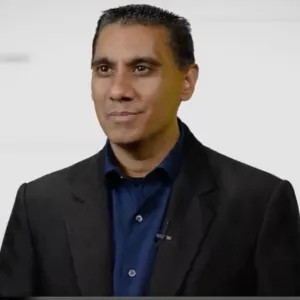
Dr. Neil Daswani, PhD
Executive-in-Residence in Cybersecurity, Columbia Engineering
Cybersecurity Executive, Investor, and Author
Dr. Neil Daswani is a cybersecurity executive, entrepreneur, investor, author, and Executive-in-Residence at Columbia Engineering. He is also CISO-in-Residence at Firebolt Ventures and Co-Academic Director of Stanford’s Advanced Cybersecurity Program.
Throughout his career, Neil has focused on understanding how systems become vulnerable, how organizations can better manage cybersecurity risk, and how technology can be built more securely. His experience spans organizations including Google, Twitter, LifeLock, Symantec’s Consumer Business Unit, and QuantumScape. He also co-founded Dasient, a cybersecurity company backed by Google Ventures that was later acquired by Twitter, and has served as Chief Information Security Officer at multiple public companies.
Today, his work focuses on both securing artificial intelligence and using AI for cybersecurity applications. He advises multiple venture capital funds and is the co-author of Big Breaches: Cybersecurity Lessons for Everyone and Foundations of Security: What Every Programmer Needs to Know. He holds more than a dozen patents, has published dozens of technical articles, and speaks frequently at leading industry events.
Daswani earned his PhD and MS in Computer Science from Stanford University and a BS in Computer Science with honors and distinction from Columbia University.
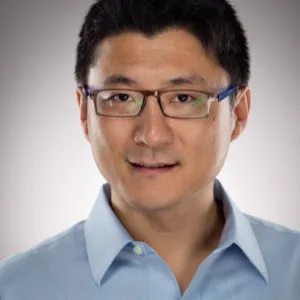
Dr. Junfeng Yang, PhD
Professor and Co-Director, Software Systems Laboratory, Department of Computer Science, Columbia Engineering
Junfeng Yang is a Professor of Computer Science at Columbia University whose research sits at the intersection of artificial intelligence, security, and software systems. His work addresses critical vulnerabilities and performance bottlenecks in complex computing platforms and has helped drive vulnerability patches and shape engineering practices in systems ranging from Linux to NASA’s Perseverance Mars rover.
Yang is an ACM Fellow and a recipient of the ACM SIGOPS Mark Weiser Award, the IEEE Symposium on Security and Privacy Test-of-Time Award, and an Alfred P. Sloan Research Fellowship.
He earned his PhD and MS in Computer Science from Stanford University and his BS from Tsinghua University.